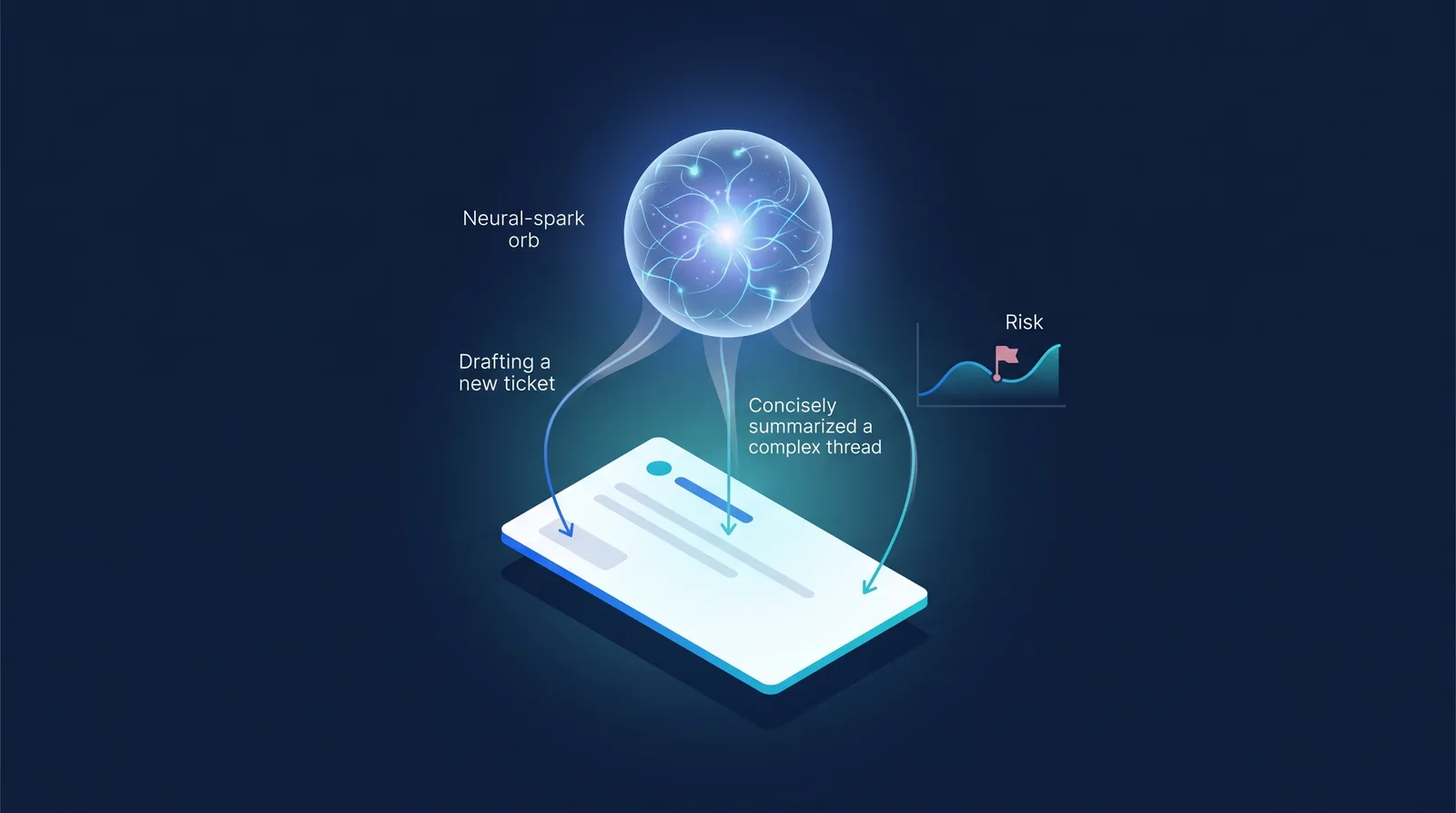
The most useful AI surface for a planning tool is often not a chat box inside the planning tool. It is the agent an engineer is already working in — an editor assistant, a terminal agent, a CI bot — being able to read and change the plan directly.
PlanMagnet publishes a Model Context Protocol server for exactly that. It exposes the PlanMagnet domain as typed, product-prefixed tools across the entities that matter: projects, programs and portfolios, work items, sprints, boards and columns, milestones, dependencies, budgets and expenses, risks, releases, quality gates, roadmaps and roadmap items, time tracking, automations, feature requests and competitors, custom fields, project templates, and external sync. Alongside them it mounts the shared platform modules — auth, workspaces, files, conversations, tags, RBAC, notifications, export, integrations and more — so an agent can complete a real task instead of hitting a wall at the first cross-cutting concern.
The server is a thin shell by design. It builds a context with PlanMagnet's defaults, selects which modules to mount, and picks a transport; all module logic lives in the shared library, so the tool surface tracks the platform rather than drifting into a bespoke reimplementation. Every call runs against the workspace API gateway, which means the agent inherits the same permission enforcement, workspace scoping, and audit path a human client gets — an agent is not a privileged back door.
There is a governance gap here that PlanMagnet states rather than hides. The tool surface includes destructive operations — deleting projects, work items, sprints, roadmap items, budgets, risks and more — and those tools do not currently require a confirmation step or offer a dry-run mode at the protocol level. Permission checks still apply, so an agent cannot exceed its actor's rights, but an agent acting within its rights can delete faster than a human would. Confirmation gating for destructive tools is committed work, and until it lands, scoping the credentials you hand an agent is the real control.
The MCP server is published and its tool surface is real today. The in-app assistant is a different matter: PlanMagnet has not yet wired the platform's shared assistant widget, and the app's own AI page is currently a placeholder rather than a working surface. So today the honest answer is that PlanMagnet is best driven by AI from outside the app, and the inside-the-app experience is roadmap. This story is narrative-only today; the interactive app walkthrough is not yet available.
Ready to make this your story?