Here is how a feedback inbox quietly inverts its own purpose. "SSO", "SAML login", "enterprise sign-on" and "Okta support" arrive from four different sales calls as four separate requests. Each collects a handful of votes. Each individually loses to one noisy request with twenty. The loudest single voice wins precisely because the duplicates were never merged — the exact failure the feedback inbox exists to prevent.
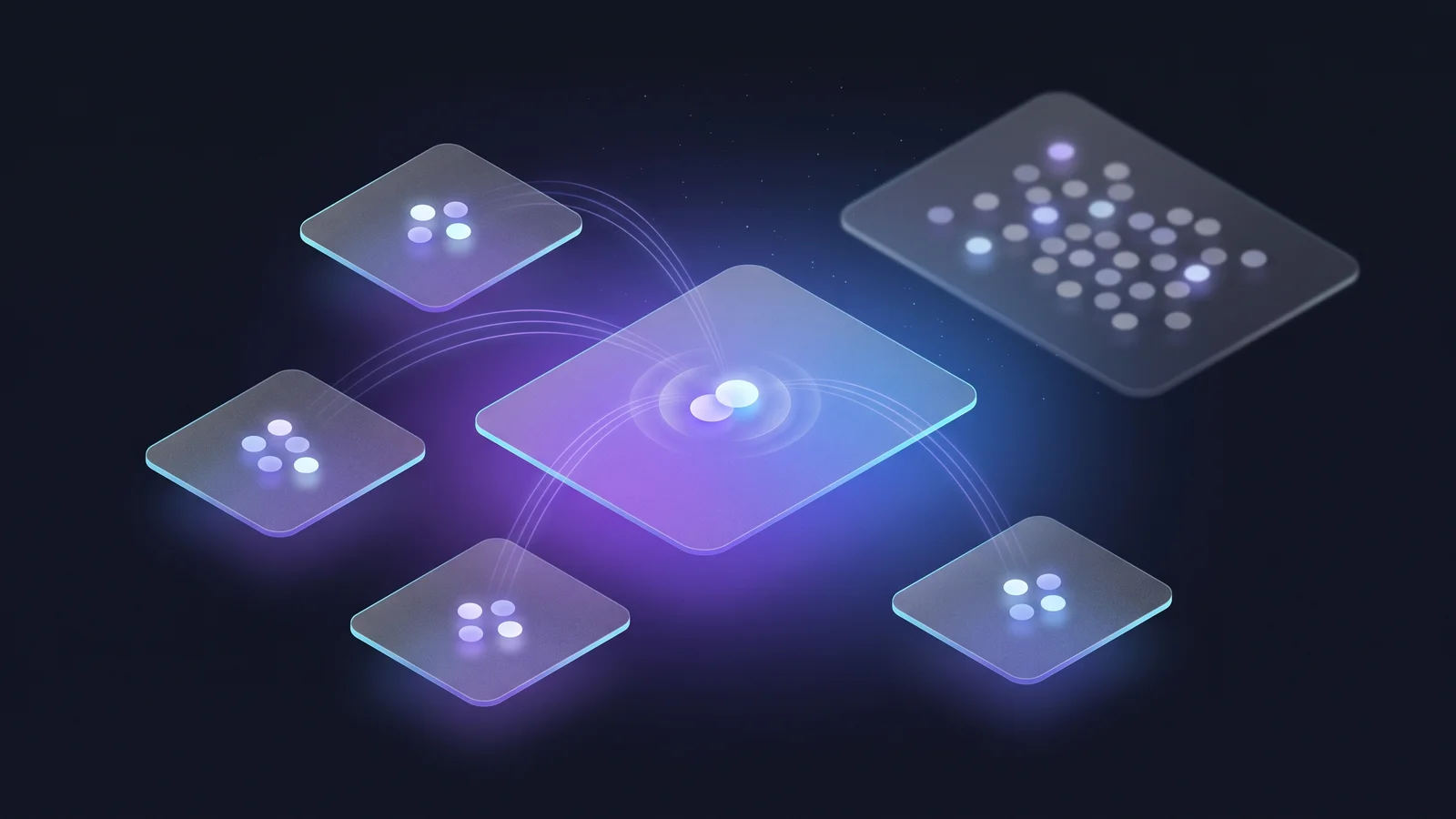
String matching cannot fix this. Nothing connects "SAML" to "enterprise sign-on" at the character level; it needs semantic similarity over the workspace's own request corpus. That is the designed capability: embeddings over request titles and descriptions, a similarity search that returns ranked candidates with scores, and a clustering pass that proposes duplicate groups as suggestions for a human to accept or reject.
The genuinely missing operation underneath it is a real merge. Merging has to consolidate votes without double-counting a person who voted on two of the duplicates — that de-duplication is the entire point of weighting by impact rather than by volume — and it has to preserve the provenance of the merged sources so the trail back to the original sales call survives. That is a correctness problem, not a model problem, and it is specified as such.
The highest-leverage placement is at creation time. When a product manager starts typing a new request, the design surfaces "three similar requests already exist" before the duplicate is created, because prevention beats cleanup. The same relationship reasoning is designed to suggest which roadmap initiative already addresses an incoming request, turning the feedback-to-initiative link from an archaeology exercise into a click — with candidates and stated reasons, never an automatic link.
Strict workspace scoping is non-negotiable in the design: one workspace's corpus must never influence another's suggestions. All of this is roadmap. What ships today is the substrate — feature requests, votes, competitor links, and roadmap items as real connected records — while the similarity, clustering, merge, and initiative-suggestion operations do not exist in the service yet. This is the AI capability in PlanMagnet that changes what gets built rather than how fast tickets get typed, which is why it is specified in this much detail before being built. This story is narrative-only today; the interactive app walkthrough is not yet available.
Ready to make this your story?