
Project Staffing Demand Forecast
Turn planned engagements into dated role-and-skill staffing requests, checked against real capacity before a start date is promised.
These images are illustrations of the concept, not screenshots of the actual product.
Overview
Project Staffing Demand Forecast is a PlanMagnet concept for HR, staffing and workforce teams and the delivery and resourcing leads they support, who need to know weeks ahead which people the plan requires. It turns planned engagements into dated staffing requests by role and skill, rolls them up by week and compares them with the capacity that will actually be free, before a start date is promised to a client or a sponsor.
Staffing demand usually surfaces late. An engagement is signed, the delivery lead asks resourcing for three engineers starting soon, and only then does anyone discover that the right skills are committed elsewhere. Workforce teams end up hiring or bringing in contractors in a hurry, while teams that are already stretched get committed further. The same pattern shows up in consulting firms, accounting practices and agencies, where every new engagement needs people with the right skills on a specific date.
The illustrated Staffing Demand page sits under Analytics and covers the next eight weeks across a handful of sample engagements. Tiles count roles requested, roles covered by capacity and gaps. A Demand vs capacity by week chart stacks demand by skill family, here data engineering, front-end, cloud ops and QA, against a CrewFoundry capacity line that runs below total demand every week and drops sharply in the third week before recovering. A Capacity notes panel shows an aggregate-only note from TimeCampus that one team has shown high after-hours work for three weeks, with a link to review the related sprint. The Staffing requests table lists each request with its engagement, role and headcount, skills, start date, soft or hard booking, a capacity check and a status of sent to CrewFoundry, matched, gap or draft. An expanded gap row states its reason, that no cloud ops capacity is free until a later week and the start date is at risk, and offers Send to CrewFoundry and Adjust start date.
In the design, the delivery lead sets up a likely engagement in PlanMagnet with the roles, skills, allocation and start date it needs, soft-booked until the contract is signed and hard-booked after. Capacity from CrewFoundry is designed to supply the comparison with real availability, and each request is designed to be sent to CrewFoundry, where resourcing decides between people rolling off other work, the bench, a new hire or a contractor. TimeCampus is designed to contribute only aggregate capacity notes, so a stretched team is visible before it is committed further. Engagements, roles and figures shown are sample data.
What this concept shows
- Tiles for roles requested, roles covered by capacity and gaps over the next eight weeks
- A Demand vs capacity by week chart that stacks demand by skill family against a CrewFoundry capacity line
- A staffing requests table with engagement, role and headcount, skills, start date, booking type and capacity check
- Soft and hard booking, so a likely engagement counts toward demand before its contract is signed
- Request statuses for sent to CrewFoundry, matched, gap and draft
- Gap rows that state a reason, with Send to CrewFoundry and Adjust start date actions
- Aggregate-only capacity notes from TimeCampus that flag a team already running long hours
- Export and Share actions on the staffing requests table
How it works
- Set up a likely engagement with the roles, skills, allocation and start date it needs, soft-booked until the contract is signed.
- Open Staffing Demand under Analytics and read the tiles for roles requested, roles covered and gaps.
- Check the weekly chart to see which skill families exceed CrewFoundry capacity, and in which weeks.
- Read the capacity notes before committing an already stretched team further.
- Expand a gap to read its reason, then adjust the start date or send the request to CrewFoundry.
- Let resourcing in CrewFoundry fill the request from roll-offs, the bench, a new hire or a contractor.
Who it's for
- Resourcing and workforce managers
- Delivery leads
- HR business partners
- Practice leads in consulting and accounting firms
- Agency operations managers
Illustrations
1 illustration of this concept. Select one to view it full size.
Staffing Demand by Week and Skill
This illustration shows the Staffing Demand page under Analytics, with a period selector at the top right. The heading covers the next eight weeks across several sample engagements, beside tiles for roles requested, roles covered by capacity and gaps, the last in amber. A stacked bar chart shows weekly demand for data engineering, front-end, cloud ops and QA against a CrewFoundry capacity line that stays below total demand and drops sharply in the third week before recovering. A Capacity notes panel carries an aggregate-only note from TimeCampus about one team's sustained after-hours work and a link to review a sprint. The Staffing requests table, with Export and Share buttons, lists request, engagement, role, skills, start date, booking, capacity check and status. Statuses read sent to CrewFoundry, matched, gap and draft. The expanded gap row states that no cloud ops capacity is free until a later week, so the start date is at risk, and offers Send to CrewFoundry and Adjust start date.
Topics
- staffing demand forecast
- resource demand planning
- skills-based resource planning
- project staffing requests
- soft and hard booking
- demand vs capacity by week
- resource management for consulting firms
- workforce planning software
- agency resource planning
- bench management
Related concepts
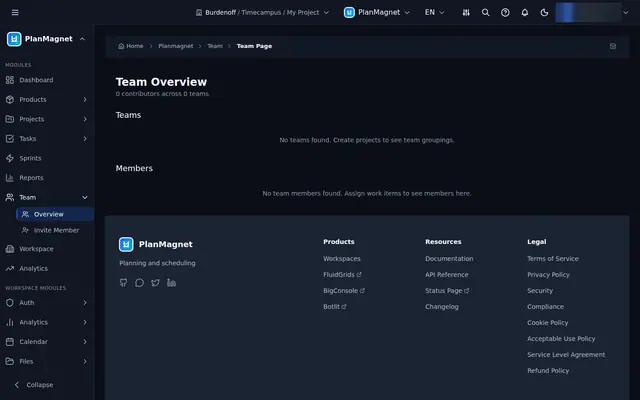
Team Overview and Invitations
See who is contributing and how they group into teams, then invite a colleague with a role, department and team in one short form.
2 illustrations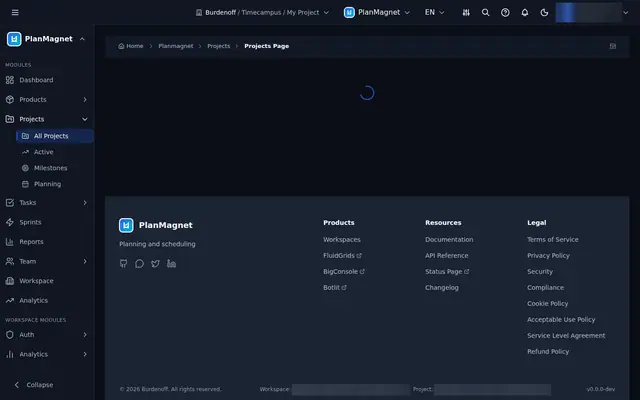
Project Portfolio and Milestones
A portfolio view that runs from every project, to the ones in flight, to the milestones they are judged by — plus a form to start the next.
4 illustrations
Dashboard, Delivery Analytics and Forecasting
One place to open the day: a delivery dashboard, project health metrics, and an AI-assisted forecast of when work lands.
3 illustrations
Part of industry solutions
This concept appears in cross-product solutions on burdenoff.com — see how it works alongside other Burdenoff products to solve a problem in that industry.

Industry solution
Consulting, Accounting & Agencies
Lays out the sold engagement's phases and role demand week by week, and shows where the plan asks for more people than CrewFoundry reports as available.
See the solution(opens in a new tab)
Industry solution
HR, Staffing & Workforce
Turns planned engagements into dated, soft- or hard-booked role-and-skill requests, weighed against CrewFoundry capacity before a start date is promised to a client.
See the solution(opens in a new tab)